Texas Medicaid telemonitoring
Medicaid Telemonitoring in Texas
Medicaid telemonitoring connects patients taking health readings at home with a care team that reviews the transmitted data. In Texas, the home telemonitoring benefit pays home health agencies to monitor eligible patients' vitals between visits. This guide covers who qualifies for telemonitoring under Texas Medicaid, who can provide and order it, how prior authorization works, how the monthly S9110 payment is structured, and what your documentation has to show.
Last reviewed against the TMHP Telecommunication Services Handbook, September 2026, §3.6–3.8.
What is Medicaid telemonitoring?
Texas Medicaid telemonitoring is the state's home telemonitoring benefit: a home health agency places connected devices with an eligible patient, the patient takes readings at home, a care team reviews them, and the agency bills Texas Medicaid — through TMHP — once a month under code S9110. TMHP's own definition: home telemonitoring, "also known as remote patient monitoring," is scheduled remote monitoring of a client's health data, transmitted from the home to a licensed home health agency, hospital, FQHC, or RHC.
The important thing to understand is that it is a monitoring benefit, not a visit benefit. Payment follows the monitoring activity across the month rather than a single encounter, which is why reading days and clinical review time end up mattering so much to whether a claim holds up.
Who qualifies for Texas Medicaid telemonitoring?
A Texas Medicaid client qualifies for home telemonitoring through one of two paths. The qualifying condition and the risk factor both have to be documented on the prior authorization request.
Any age: diabetes or hypertension + one risk factor
A diagnosis of diabetes, hypertension, or both, plus at least one of:
- Two or more hospitalizations in the previous 12 months
- Frequent or recurrent emergency department visits
- A documented history of poor adherence to medication regimens
- Documented risk of falls
- A documented history of care access challenges
Age 20 and younger: a qualifying condition
Children and young adults also qualify with one of the following:
- End-stage solid organ disease
- Organ transplant recipient
- Requiring mechanical ventilation
Telemonitoring is optional for the client: the ordering provider must make sure the client has a choice of telemonitoring providers and knows they can stop the service at any time.
Who can provide and order telemonitoring under Texas Medicaid
Providers. Data is transmitted to a licensed home health agency, hospital, federally qualified health center (FQHC), or rural health clinic (RHC). FQHCs and RHCs were added as telemonitoring providers effective September 1, 2024, implementing House Bill 2727. The provider supplies and maintains the equipment, and its RN, NP, CNS, or PA reports the data to the ordering provider. Per the handbook, the monthly S9110 service and the U1 setup are billed by home health agencies and hospitals.
Ordering providers. A physician orders the service — and a nurse practitioner, clinical nurse specialist, or physician assistant may also request telemonitoring and sign the prior authorization form.
Telemonitoring, RPM, telehealth — which word means what
The vocabulary trips up a lot of agencies, because the same care model has different names depending on who is paying.
Telemonitoring
The name Texas Medicaid uses for its benefit. If you are reading TMHP policy or authorization forms, this is the word you will see.
Remote patient monitoring
The Medicare and industry term for the same model. Vendors sell "RPM"; Texas Medicaid buys "telemonitoring". See RPM Medicaid for how coverage differs by state.
Telehealth
A scheduled, real-time visit. Telemonitoring is asynchronous — readings arrive on the patient's schedule. Different benefit, different billing.
How Texas Medicaid telemonitoring works, step by step
Four moving parts, every month, for every patient on the benefit.
- 01
Physician order & prior authorization
A physician (or NP, CNS, or PA) orders the service, and the agency submits a prior authorization request to TMHP within three business days of starting. Each approval covers up to 180 days.
- 02
Devices in the patient’s home
The agency supplies and maintains FDA Class II devices, and readings transmit from the home automatically. Setup is billed once per episode of care as S9110-U1.
- 03
Monitoring, review & escalation
Nurses review incoming readings and report out-of-range values to the physician — or at least once a month if none occur. Providers must be reachable 24/7.
- 04
Monthly S9110 claim
Each rolling month, the number of days data was received and reviewed sets the U2–U9 modifier, and the claim goes out with the documentation that supports it.
Submit within 3 business days
The initial request must reach TMHP no more than three business days after monitoring starts. Dates of service before a late request is received are denied.
Up to 180 days per request
Each authorization covers up to 180 days. A renewal received after the current period ends is denied for the days in between — track end dates.
Signature within 30 days of start of care
The physician or requesting provider (an NP, CNS, or PA may sign) must date the form within 30 days before monitoring begins — or attach a current written or verbal order.
Diagnosis, risk factor & frequency
The request must show the qualifying condition, the qualifying risk factor, and the transmission frequency ordered. Include setup (S9110-U1) in the order if it is to be authorized.
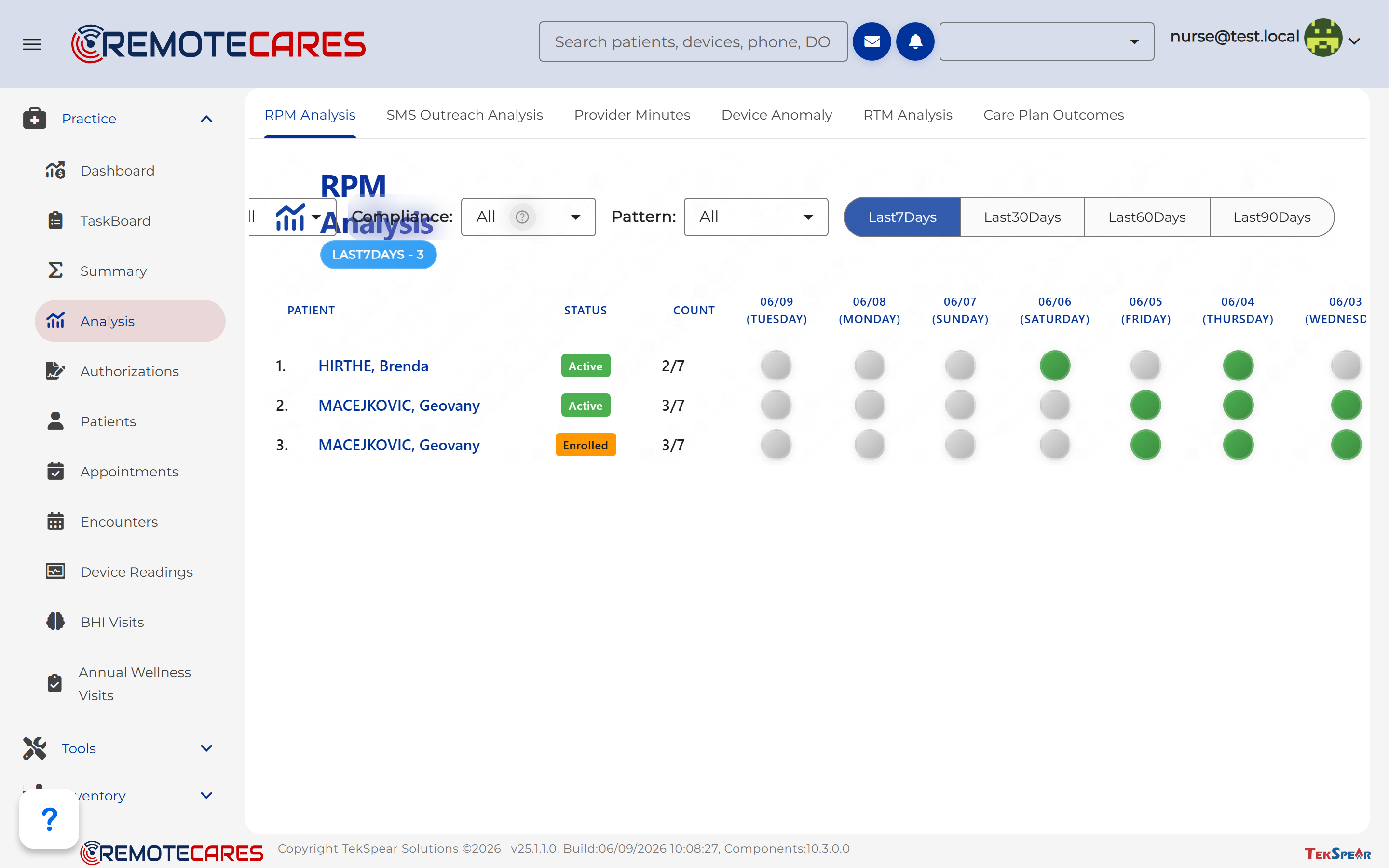
RemoteCares automates all four — TMHP telemonitoring & RPM for Texas Medicaid walks through the authorization, monitoring, and billing screens in detail.
What Texas Medicaid telemonitoring pays
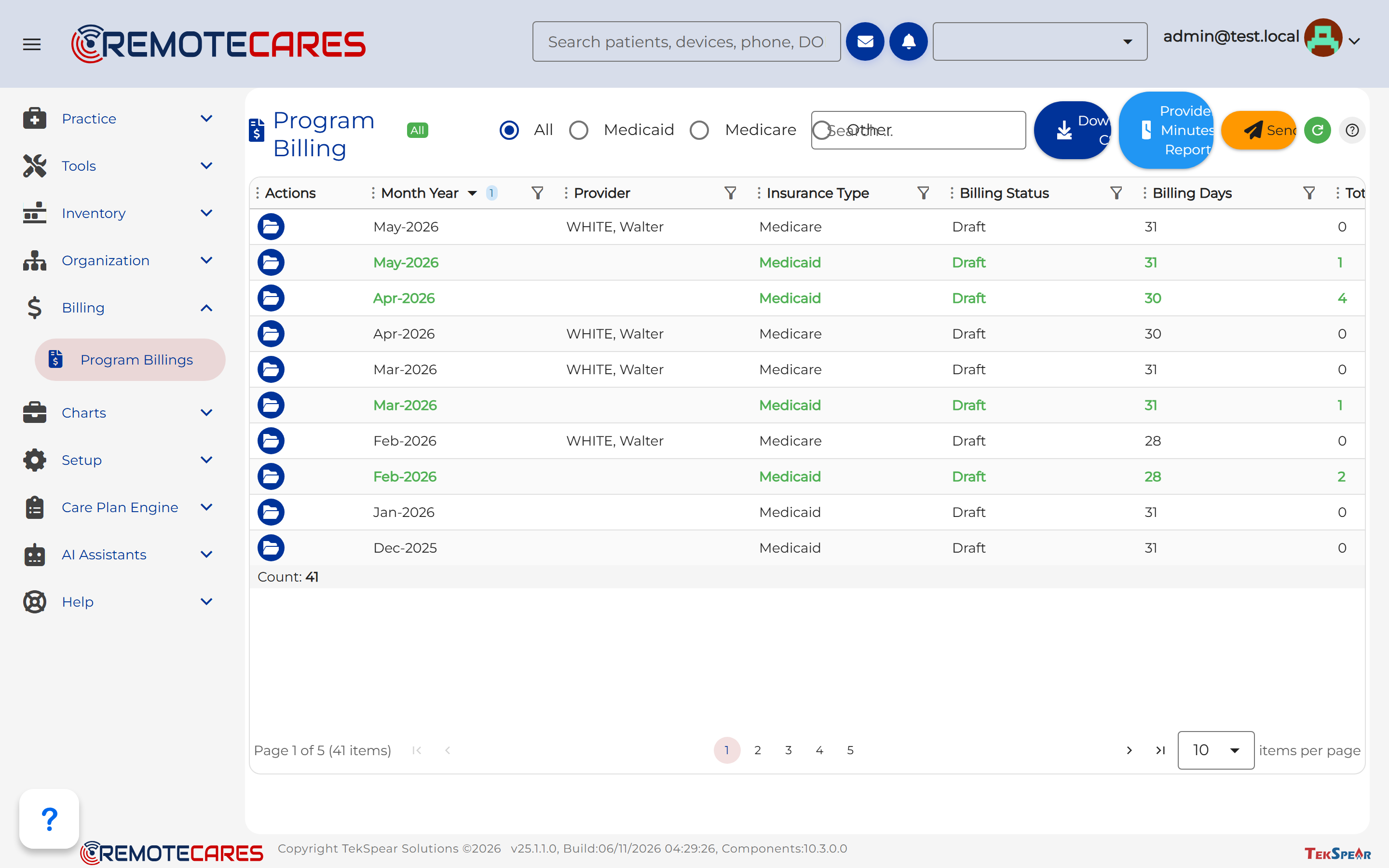
Payment is monthly, and it steps up with reading days. S9110-U1 pays once for the initial setup and installation in each episode of care. After that, the agency bills S9110 (revenue code 780) once per rolling month with a U2–U9 modifier set by the number of days transmissions were received and reviewed — so a well-run program with engaged patients is paid at a materially higher tier than one where devices sit unused. Clinical time is not part of the modifier; reading days are.
Separately, the ordering physician can bill 99091 for collecting and interpreting the data — once per 30 days, no prior authorization required.
| Code | Reading days | Monthly reimbursement |
|---|---|---|
| S9110-U1 | Initial setup | $50.00 |
| S9110-U2 | 1–5 reading days | $40.10 |
| S9110-U3 | 6–10 reading days | $80.19 |
| S9110-U4 | 11–15 reading days | $120.29 |
| S9110-U7 | 16–20 reading days | $160.38 |
| S9110-U8 | 21–25 reading days | $200.48 |
| S9110-U9 | 26–30 reading days | $240.57 |
Based on the TMHP S9110 fee schedule, billed monthly by reading days. Rates change — verify current amounts with TMHP.
For a deeper look at the code itself and where claims typically go wrong, read S9110 and Texas Medicaid RPM billing, explained.
What your documentation has to show
Paid telemonitoring claims are subject to retrospective review, and anything not backed by documentation of medical necessity can be recouped. Per the handbook, the agency's record has to show:
- Equipment that is an FDA Class II hospital-grade device able to measure and transmit weight, blood oxygen, blood glucose, or blood pressure — and every parameter in the plan of care.
- Proof the equipment is being used: the date and frequency of each transmission, and the clinical data sent to the physician or requesting provider.
- A plan of care with outcome measures, reviewed by the client’s physician.
- Staff qualified to install the equipment and monitor the data.
- That no other provider is also monitoring the client’s clinical data.
- Whether the client can operate the equipment, or has someone willing and able to help.
- Written security and data-handling policies, available to HHSC on request.
The transmission log does double duty: it proves the equipment is in use, and it is the reading-day count behind the modifier on every claim — so capture it as readings arrive, not at month end.
Medicaid telemonitoring outside Texas
Medicaid telemonitoring is defined state by state. Many state Medicaid programs cover some form of remote monitoring, but the name, the eligible conditions, the provider types, and the billing codes differ — few use a single code with reading-day tiers the way Texas does with S9110. The Center for Connected Health Policy tracks each state's current policy. For how Medicaid coverage compares with Medicare RPM, see RPM Medicaid.
This guide is educational, not billing or legal advice. Texas Medicaid coverage rules, eligible conditions, modifier definitions, and rates change over time. This page reflects the TMHP Telecommunication Services Handbook, September 2026, §3.6–3.8; verify current requirements with TMHP and your own compliance team before enrolling patients or submitting claims.
Texas Medicaid telemonitoring FAQ
What is Medicaid telemonitoring?
Medicaid telemonitoring is remote monitoring of patient health readings at home under a state Medicaid program. Connected devices transmit measurements to a care team for review and follow-up. Coverage, eligibility, authorization, and billing depend on the state and payer. This guide focuses on the Texas Medicaid home telemonitoring benefit.
What is Texas Medicaid telemonitoring?
Texas Medicaid telemonitoring — formally the home telemonitoring benefit — lets a home health agency monitor an eligible patient’s vitals remotely between visits and bill Texas Medicaid monthly for that monitoring. Readings come from connected devices in the patient’s home, a care team reviews them, and the agency submits a claim under code S9110.
Is telemonitoring the same as remote patient monitoring?
In practice they describe the same care model — connected devices at home, readings reviewed by a care team. The difference is vocabulary: "remote patient monitoring" (RPM) is the term used for the Medicare benefit and across the industry, while "telemonitoring" is the name Texas Medicaid uses for its own benefit. If you are searching TMHP materials, look for telemonitoring; if you are comparing platforms, they will say RPM.
Is telemonitoring the same as telehealth or a virtual visit?
No. A telehealth visit is a scheduled, real-time encounter between a patient and a clinician. Telemonitoring is asynchronous — the patient takes readings on their own schedule, the data flows to the care team, and the team reviews and acts on it. They are separate benefits with separate billing.
Does Texas Medicaid cover telemonitoring?
Yes. Home telemonitoring — which TMHP notes is also known as remote patient monitoring — is a Texas Medicaid benefit. A licensed home health agency, hospital, FQHC, or RHC monitors the client’s health data from home, and the monthly service is billed under procedure code S9110 with prior authorization.
Does Texas Medicaid telemonitoring require prior authorization?
Yes. S9110, with or without the U1 setup modifier, requires prior authorization from TMHP. The initial request must be received within three business days of starting services, each approval covers up to 180 days, and the physician or requesting provider’s signature must be dated within 30 days before the start of care. RemoteCares generates and routes that paperwork for TMHP, Molina, and Superior and keeps every signed version on file.
Who can order telemonitoring under Texas Medicaid?
A physician, or a nurse practitioner (NP), clinical nurse specialist (CNS), or physician assistant (PA), may request home telemonitoring and sign the prior authorization form. The ordering provider must make sure the client has a choice of telemonitoring providers and knows they can stop the service at any time.
How is Texas Medicaid telemonitoring reimbursed?
It is paid monthly rather than per visit. S9110-U1 pays once per episode of care for the initial setup and installation. After that, the agency bills S9110 once per rolling month with a U2–U9 modifier set by the number of days data was transmitted and reviewed (U2 = 1–5 days, up to U9 = 26–30 days), so a month with more reading days pays at a higher tier. Verify current rates against the TMHP fee schedule.
What does an agency need to document?
TMHP requires the agency’s record to show that the equipment is an FDA Class II hospital-grade device covering the plan-of-care parameters, that it is being used (date and frequency of each transmission, and the data sent to the physician), a physician-reviewed plan of care with outcome measures, qualified staff, that no other provider is monitoring the same client, and written security policies. Paid claims not supported by documentation can be recouped.
Which patients are eligible for the Texas telemonitoring benefit?
Clients of any age with diabetes, hypertension, or both qualify when they also have at least one risk factor: two or more hospitalizations in the past 12 months, frequent or recurrent ER visits, a documented history of poor medication adherence, documented fall risk, or documented care access challenges. Clients 20 and younger also qualify with end-stage solid organ disease, an organ transplant, or mechanical ventilation. Criteria change, so confirm against the current TMHP handbook.
How do agencies get started with telemonitoring?
Most agencies already touch these patients regularly — the work is turning that into a documented, reimbursable program: get the physician order and authorization in place, put connected devices in the home, monitor readings and report to the physician, and bill S9110 monthly by reading days. RemoteCares runs all four steps in one platform.
Start a Texas Medicaid telemonitoring program
A short walkthrough with your programs, devices, and billing in mind. No pressure — just a clear look at the platform.