What Is Remote Patient Monitoring?
RemoteCares Team · January 14, 2026
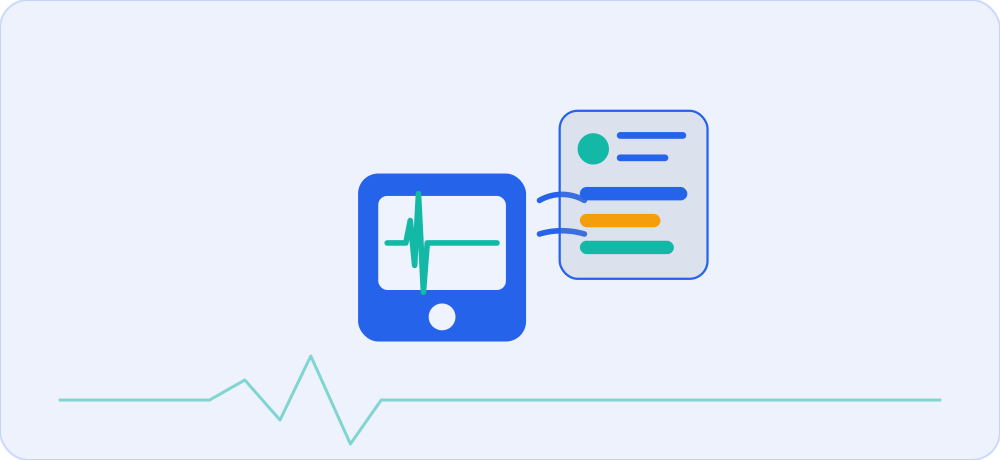
Remote patient monitoring (RPM) lets a care team follow a patient’s health between visits using connected devices that send readings from home directly into the clinical record. Instead of waiting for the next appointment to learn that a patient’s blood pressure has been climbing for two weeks, the care team sees the trend as it forms — and can reach out before a small problem becomes an urgent one.
The devices
RPM runs on everyday measurement tools made smart enough to transmit on their own. Common examples include:
- Blood pressure cuffs for patients managing hypertension
- Glucometers for diabetes management
- Weight scales for heart-failure monitoring, where a few pounds of fluid gain matters
- Pulse oximeters for respiratory conditions
The most reliable setups use cellular-connected devices. The patient takes a reading, and it arrives in the chart without needing to pair a phone, log into an app, or copy numbers by hand. Fewer steps means more consistent data — which is the whole point.
The reading-day idea
A central concept in RPM is the reading day: a calendar day on which the patient submitted at least one qualifying measurement. Programs are generally built around the expectation that a patient transmits data on a meaningful number of days each month — a common benchmark used in many programs is 16 reading days in a 30-day period. Hitting that threshold isn’t just an administrative checkbox; it reflects whether the monitoring is actually happening often enough to be clinically useful. Sparse data makes it hard to distinguish a real trend from normal day-to-day variation.
Who benefits
RPM tends to help most where a condition is chronic, measurable at home, and sensitive to early intervention. Patients with hypertension, diabetes, heart failure, or COPD are frequent candidates. The benefit runs both ways: patients get reassurance and faster responses, while care teams get a steadier picture of how someone is really doing — not just a snapshot from one office visit.
How RemoteCares streamlines it
The hard part of RPM is rarely the first reading; it’s keeping a whole panel of patients monitored, reviewed, and documented, month after month. RemoteCares is built around that reality:
- Automatic ingestion pulls device readings straight into the chart, so nobody is transcribing numbers.
- Reading-day tracking counts qualifying days per patient, so the team can see at a glance who is on track and who needs a nudge.
- Anomaly and missed-reading alerts surface the patients who need attention today, instead of asking clinicians to scan every chart.
- Clean documentation ties readings and review time together, so the clinical work and the record stay in sync.
Done well, RPM shifts care from reactive to proactive. The technology fades into the background, and the care team simply gets a clearer, earlier view of the people they’re responsible for.
For home health agencies in Texas, RPM is billed through the state’s Medicaid benefit — see how TMHP telemonitoring works and how agencies bill S9110 for it.